Showing posts with label global heating. Show all posts

Sunday, June 21, 2015

5 Radical Takeaways from the Pope’s Letter on Climate

Pope Francis recognizes that there’s no way to stop climate change without confronting the way the world does business. That’s huge.

Pope Francis just released an "encyclical," a letter meant to serve as a guide to understanding our personal relationship to some of the most complex issues of the day through religious doctrine. This particular encyclical is on climate change and is addressed not just to the globe’s 1.2 billion Catholics, but to everyone of any — or no — faith. In it, Pope Francis boldly challenges us all to take an honest look inside our hearts and question the foundations of a society that’s created wealth for some at the expense of others and "our common home"— the planet earth.

Here are five key quotes from the encyclical that will shake up the global climate debate.

1. Climate change and inequality are inextricably linked.

"We have to realize that a true ecological approach always becomes a social approach; it must integrate questions of justice in debates on the environment, so as to hear both the cry of the earth and the cry of the poor." It’s not hard to see how climate change hits people living in poverty first and worst, and inevitably widens the gulf between rich and poor. After extreme weather washes away their homes or drought kills their crops, those living in poverty have a harder time bouncing back than those with savings accounts and sturdier houses. But what’s really radical is how the Pope names inequality itself as an impediment to solving a looming planetary and human rights crisis. The encyclical calls out "masters of power and money" to stop masking the symptoms and address climate change in service of the common good.

Pope Francis boldly challenges us all to take an honest look inside our hearts and question the foundations of a society that’s created wealth for some at the expense of others and "our common home"— the planet earth.

2. The global economy must protect the Earth, our common home.

"The economy accepts every advance in technology with a view to profit, without concern for its potentially negative impact on human beings." Today’s global economy profits at the environment’s expense. And the pursuit of growth is fueling environmental degradation, natural disasters, and financial crises. Pope Francis envisions a people-and-planet-first economy more in harmony with the environment that would prevent imbalances of wealth and power and foster peace among nations.

3. Everyone must divest from fossil fuels and invest in the future.

"We know that technology based on the use of highly polluting fossil fuels… needs to be progressively replaced without delay." Pope Francis is crystal clear that the current development model based on the intensive use of coal, oil, and even natural gas has to go. In its place we need renewable energy options and new modes of production and consumption that combat global warming. This is precisely what a growing movement of students, faith communities, socially responsible investors and everyday citizens are calling on individuals and private and public institutions to do: Divest their money from fossil fuels and invest it in climate solutions like wind, solar, and energy efficiency.

4. It’s time for powerful nations to pay their fair share.

"A true ‘ecological debt’ exists, particularly between the global north and south. … In different ways, developing countries, where the most important reserves of the biosphere are found, continue to fuel the development of richer countries at the cost of their own present and future." Countries in the global North have benefitted from fossil fuel-driven industrialization, while developing countries bear the brunt of the related greenhouse gas emissions. So while everyone must act to avoid climate disruption, rich countries have a greater responsibility. For starters, they must make rapid, deep cuts in carbon emissions. And they have to keep their promise to finance the cost for poorer countries to build climate resilience and transition to renewable energy through the Green Climate Fund.

5. There’s no easy way out of this.

"Obstructionist attitudes, even on the part of believers, can range from denial of the problem to indifference, nonchalant resignation, or blind confidence in technical solutions." There’s only one way to meet the climate challenge: Extinguish the "dig, burn, dump economy." And markets and technology can’t be relied on to do the job. Gimmicks like trading carbon credits as a financial commodity or burning coal in "cleaner" power plants are distractions from the only real solution: Stop digging up and drilling — then burning — oil, gas, and coal.

Pope Francis is calling for solutions to climate change that is rooted in our "deepest convictions about love, justice, and peace." His letter to the world illuminates a radical, compassionate path that shows what it truly means to have faith in humanity. More


Monday, December 8, 2014

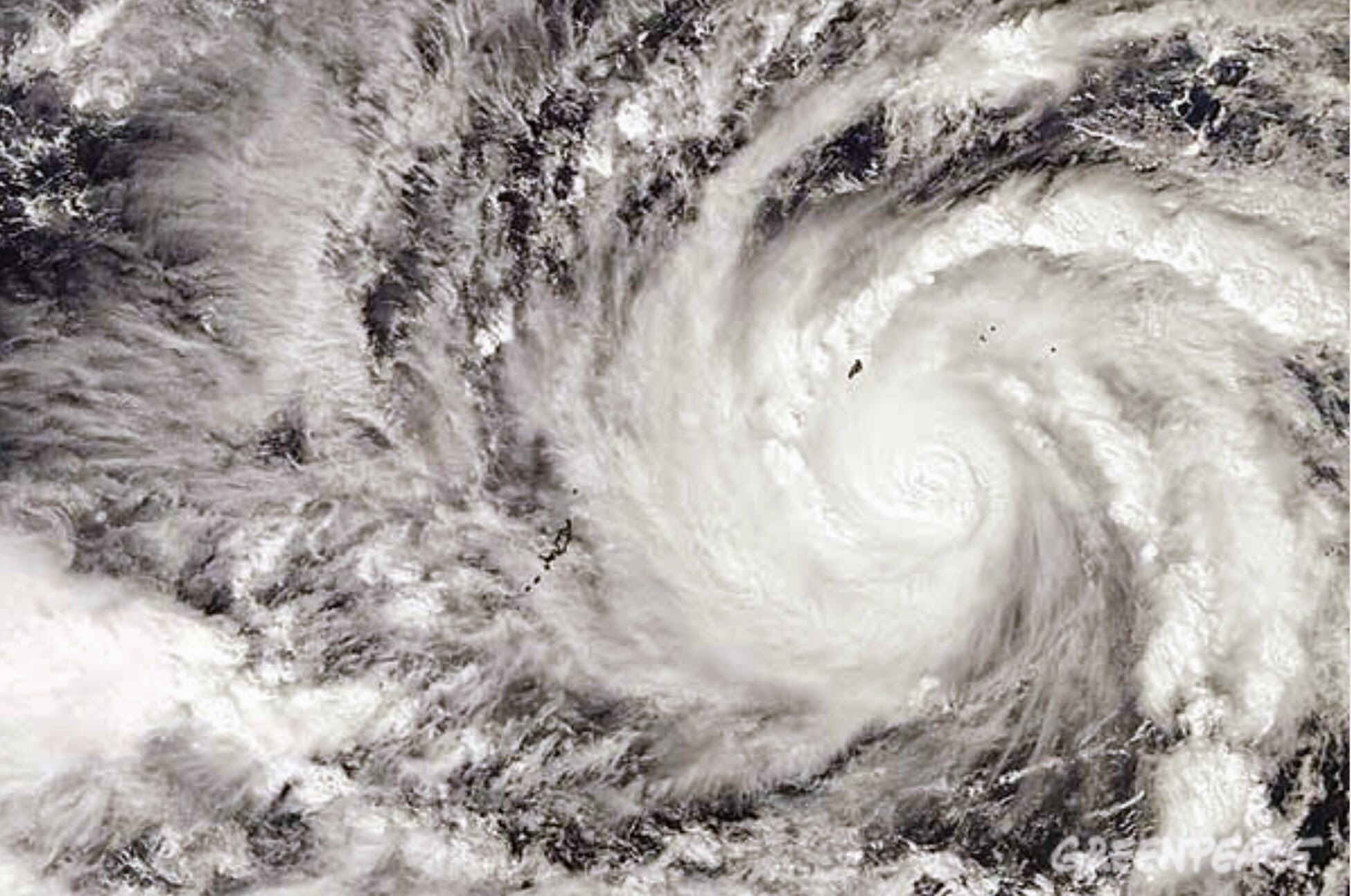
Typhoon Hagupit Hits Philippines: Climate Catastrophe Is Here Now! by Kumi Naidoo

As Typhoon Hagupit hits the Philippines, one of the biggest peacetime evacuations in history has been launched to prevent a repeat of the massive loss of life which devastated communities when Super Typhoon Haiyan hit the same area just over a year ago.

Typhoon Hagupit

“One of the biggest evacuations in peacetime” strikes a sickening chord. Is this peacetime or are we at war with nature?

I was about to head to Lima, when I got a call to come to the Philippines to support our office and its work around Typhoon Hagupit (which means lash). In Lima another round of the UN climate talks are underway to negotiate a global treaty to prevent catastrophic climate change. A truce of sorts with nature.

But these negotiations have been going on far too long, with insufficient urgency and too much behind the scenes, and not so much behind the scenes, interference from the fossil fuel lobby.

This year, like last year and the year before these negotiations take place against a devastating backdrop of a so-called ‘extreme weather event’, something that climate scientists have been warning us about if we don’t take urgent action.

Tragically, we are not taking urgent action. Nature does not negotiate, it responds to our intransigence. For the people of the Philippines, and in many other parts of the world, climate change is already a catastrophe.

Only one year ago, Super Typhoon Haiyan killed thousands, destroyed communities and caused billions of dollars in damage. Many survivors who are still displaced have this week had to evacuate the tents they have been living in as Typhoon Hagupit carves a path across the country as I write.

It’s too early to assess the impact so far—we are all hoping early indications will spare the Philippines of the same pain that was experienced after Haiyan.

Here in Manila, we prepare to travel to the impacted areas in the wake of Typhoon Hagupit, or Ruby, as it has been named. We will offer what minor assistance we can.

We will stand in solidarity with the Filipino people and we will call out those who are responsible for climate change, those who are responsible for the devastation and who should be helping pay for the clean up and for adaptation to a world in which our weather is an increasing source of mass destruction.

With heavy hearts we prepare to bear witness. We challenge those in Lima to turn their attention from the lethargy and process of the negotiations and pay attention to what is happening in the real world.

We call on them to understand that climate change is not a future threat to be negotiated but a clear and present danger that requires urgent action now!

Each year, the people of the Philippines learn the hard way what inaction on emissions mean. They might be slightly better prepared and more resilient, but they are also rightly more aghast that each year—at the same time—the climate meetings seem to continue in a vacuum, not prepared to take meaningful action, not able to respond to the urgency of our time and not holding accountable the Big Polluters that are causing the climate to change with ferocious pace.

Before leaving for Manila I also received a message from Yeb Saño, climate commissioner for the Philippines: “I hope you can join us as we bear witness to the impact of this new super typhoon. Your help would be very valuable in delivering a message to Lima loud and clear.”

Yeb was the Filipino chief negotiator for three years at the UN climate talks and recently visited the Arctic on a Greenpeace ship to witness the Arctic sea ice minimum. Two years ago in Doha, as Typhoon Pablo took the lives of many he broke through the normally reserved language of dispassionate diplomacy that dominates UN climate treaty talks:

“Please … let 2012 be remembered as the year the world found the courage to … take responsibility for the future we want. I ask of all of us here, if not us, then who? If not now, then when? If not here, then where?”

I am joining Greenpeace Philippines and Yeb to visit the worst hit areas, document the devastation and send a clear message from climate change ground zero to Lima and the rest of the world that the ones that are responsible for the majority of emissions will be held accountable by the communities that are suffering the impacts of extreme weather events linked to climate change.

We will call on the heads of the fossil fuel companies who are culpable for the unfolding tragedy to examine their consciences and accept their historic responsibility. They say the truth is the first casualty of war, in this war against nature, the truth of climate science is unquestionable.

Please join us. Please add your voice by signing our petition calling on Big Polluters to be held legally and morally accountable for climate damages. After signing the petition you will be redirected to a site where you can make a donation to the relief efforts of partner organizations. More


Sunday, November 9, 2014

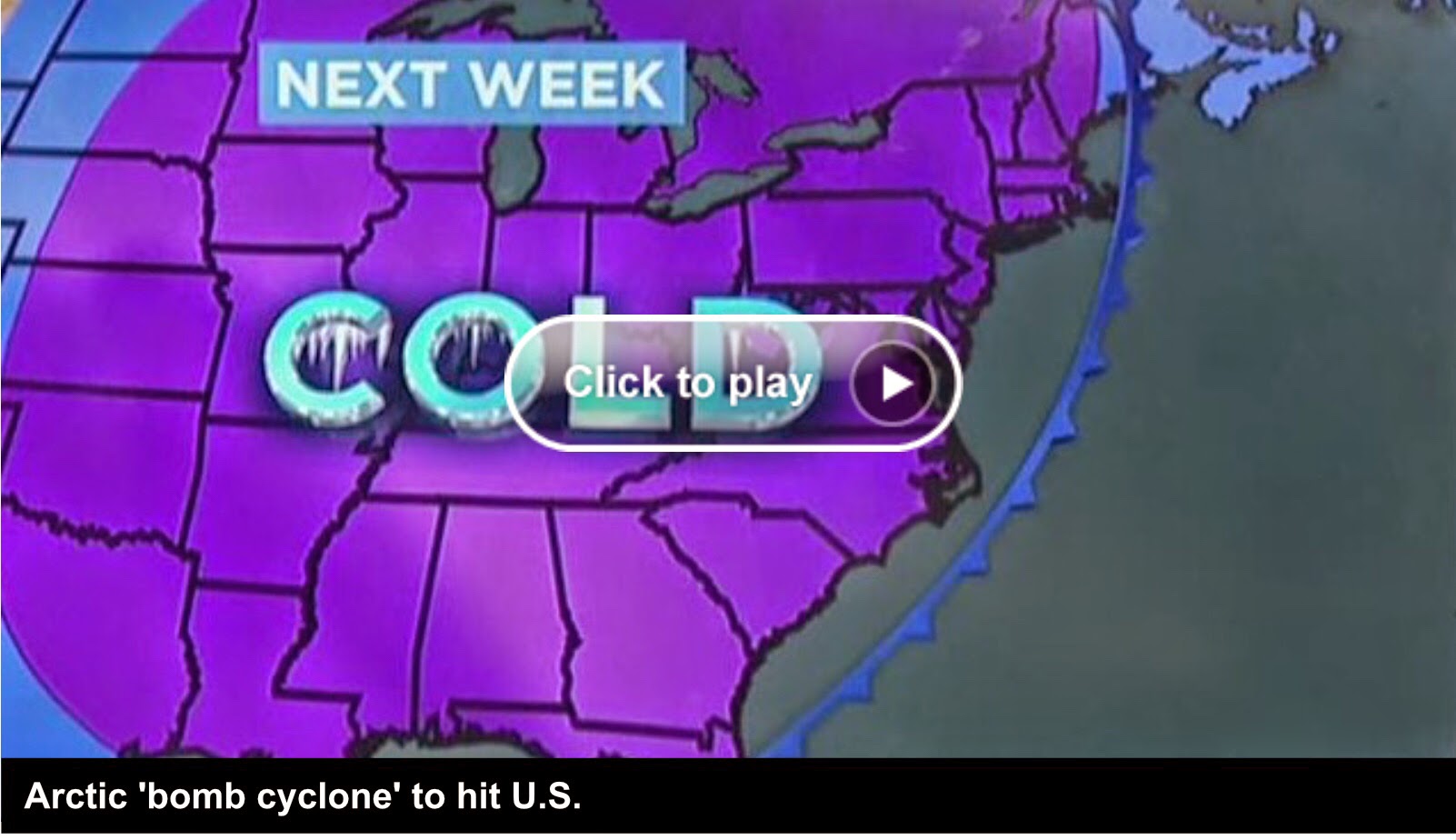
Arctic snap will ice Northern states, whipped down by 'bomb cyclone'

(CNN)The ice man cometh. And does so early this year, after a former Pacific typhoon flew up toward the Arctic and rammed the jet stream.

The stream has whipped south, dragging down frigid air from Canada over the northern Plains and Mountain States and the Upper Midwest, according to the National Weather Service.

It is already plunging temperatures below freezing there and will hammer them into the teens and single digits in many places by midweek, even lower in others.

Great Falls, Montana, will shiver at 9 below zero on Tuesday night.

It’s the coldest weather of the season, the weather service said.

Minneapolis could soon get a foot of snow, the service said, with the Minnesota city experiencing below-freezing temperatures that could last for eight days.

Let it snow

The snap is forecast to lay down the first broad layer of wintry snow, flurries, sleet or ice — long before winter starts — from Montana down to Nebraska and over to Wisconsin.

It will accumulate in inches in the northern Rockies, northern Plains and Great Lakes.

People farther south will also shiver. "Much of the nation east of the Rockies is expected to see a major pattern change by the beginning of the work week," the weather service said.

The western Dakotas are also forecast to get significant snow.

Lows will drop to freezing in Kansas City late Monday, then into the 20s a night later. The snap will stop short, leaving much of the Deep South and Southwest in a fall-like warm zone.

Rain is expected to hit Chicago and Milwaukee on Monday and Tuesday, with a few snowflakes mixed in, according to the service on Sunday afternoon.

Courtesy of Nuri

Residents in the northern United States can thank a whopping tropical cyclone in the Pacific Ocean for the wintry blast.

The remnants of super Typhoon Nuri rolled up north over Alaska’s Aleutian Islands on Friday, kicking off the ripple of Arctic air in the other direction.

Nuri is now the strongest known Northern Pacific cyclone on record, according to the National Weather Service Ocean Prediction Center.

Its remnants plowed into cold air adding violent energy as it went north, similar to what Superstorm Sandy did in the Atlantic two years ago. That earned it the weather moniker "bomb cyclone. More


Monday, September 29, 2014

Explaining Extreme Events of 2013

A report released today investigates the causes of a wide variety of extreme weather and climate events from around the world in 2013. Published by the Bulletin of the American Meteorological Society, "Explaining Extreme Events of 2013 from a Climate Perspective (link is external)" addresses the causes of 16 individual extreme events that occurred on four continents in 2013. NOAA scientists served as three of the four lead editors on the report.

Of the five heat waves studied in the report, human-caused climate change was found to have clearly increased the severity and likelihood of those events. On the other hand, for other events examined like droughts, heavy rain events, and storms, fingerprinting the influence of human activity was more challenging. Human influence on these kinds of events—primarily through the burning of fossil fuels—was sometimes evident, but often less clear, suggesting natural factors played a far more dominant role.

"This annual report contributes to a growing field of science which helps communities, businesses and nations alike understand the impacts of natural and human-caused climate change," said Thomas R. Karl, L.H.D., director of NOAA’s National Climatic Data Center. "The science remains challenging, but the environmental intelligence it yields to decision makers is invaluable and the demand is ever-growing."

Confidence in the role of climate change about any one event is increased when multiple groups using independent methods come to similar conclusions. For example, in this report, five independent research teams looked at specific factors related to the record heat in Australia in 2013. Each consistently found that human-caused climate change increased the likelihood and severity of that event. However, for the California drought, which was investigated by three teams from the United States, human factors were found not to have influenced the lack of rainfall. One team found evidence that atmospheric pressure patterns increased due to human causes, but the influence on the California drought remains uncertain.

When human influence for an event cannot be conclusively identified with the scientific tools available today, this means that if there is a human contribution, it cannot be distinguished from natural climate variability.

"There is great scientific value in having multiple studies analyze the same extreme event to determine the underlying factors that may have influenced it," said Stephanie C. Herring, PhD, lead editor for the report at NOAA’s National Climatic Data Center. "Results from this report not only add to our body of knowledge about what drives extreme events, but what the odds are of these events happening again—and to what severity."

The report was edited by Herring, along with Martin P. Hoerling, NOAA’s Earth System Research Laboratory; Thomas Peterson, NOAA’s National Climatic Data Center, and Peter A. Stott, UK Met Office Hadley Centre and written by 92 scientists from 14 countries. View the full report online (link is external).

Also, view the slides for the media briefing on the "Explaining Extreme Events of 2013 from a Climate Perspective" report. More


Monday, September 22, 2014

Whether We Engage or Do Nothing... This Changes Everything

The following is an excerpt taken from the introduction of Naomi Klein's newly published book, This Changes Everything: Capitalism vs. the Climate, and appears at Common Dreams with permission from the book's publisher Simon & Shuster. All rights reserved.

“Most projections of climate change presume that future changes—greenhouse gas emissions, temperature increases and effects such as sea level rise—will happen incrementally. A given amount of emission will lead to a given amount of temperature increase that will lead to a given amount of smooth incremental sea level rise. However, the geological record for the climate reflects instances where a relatively small change in one element of climate led to abrupt changes in the system as a whole. In other words, pushing global temperatures past certain thresholds could trigger abrupt, unpredictable and potentially irreversible changes that have massively disruptive and large-scale impacts. At that point, even if we do not add any additional CO2 to the atmosphere, potentially unstoppable processes are set in motion. We can think of this as sudden climate brake and steering failure where the problem and its consequences are no longer something we can control.” —Report by the American Association for the Advancement of Science, the world’s largest general scientific society, 2014

“I love that smell of the emissions.” — Sarah Palin, 2011

I denied climate change for longer than I care to admit. I knew it was happening, sure. Not like Donald Trump and the Tea Partiers going on about how the continued existence of winter proves it’s all a hoax. But I stayed pretty hazy on the details and only skimmed most of the news stories, especially the really scary ones. I told myself the science was too complicated and that the environmentalists were dealing with it. And I continued to behave as if there was nothing wrong with the shiny card in my wallet attesting to my “elite” frequent flyer status

Climate change is... hard to keep it in your head for very long. We engage in this odd form of on-again-off-again ecological amnesia for perfectly rational reasons. We deny because we fear that letting in the full reality of this crisis will change everything. And we are right."

A great many of us engage in this kind of climate change denial. We look for a split second and then we look away. Or we look but then turn it into a joke (“more signs of the Apocalypse!”). Which is another way of looking away.

Or we look but tell ourselves comforting stories about how humans are clever and will come up with a technological miracle that will safely suck the carbon out of the skies or magically turn down the heat of the sun. Which, I was to discover while researching this book, is yet another way of looking away.

"Climate change is... hard to keep it in your head for very long. We engage in this odd form of on-again-off-again ecological amnesia for perfectly rational reasons. We deny because we fear that letting in the full reality of this crisis will change everything. And we are right."

Or we look but try to be hyper-rational about it (“dollar for dollar it’s more efficient to focus on economic development than climate change, since wealth is the best protection from weather extremes”)—as if having a few more dollars will make much difference when your city is underwater. Which is a way of looking away if you happen to be a policy wonk. Or we look but tell ourselves we are too busy to care about something so distant and abstract—even though we saw the water in the subways in New York City, and the people on their rooftops in New Orleans, and know that no one is safe, the most vulnerable least of all. And though perfectly understandable, this too is a way of looking away.

Or we look but tell ourselves that all we can do is focus on ourselves. Meditate and shop at farmers’ markets and stop driving—but forget trying to actually change the systems that are making the crisis inevitable because that’s too much “bad energy” and it will never work. And at first it may appear as if we are looking, because many of these lifestyle changes are indeed part of the solution, but we still have one eye tightly shut.

Or maybe we do look—really look—but then, inevitably, we seem to forget. Remember and then forget again. Climate change is like that; it’s hard to keep it in your head for very long. We engage in this odd form of on-again-off-again ecological amnesia for perfectly rational reasons. We deny because we fear that letting in the full reality of this crisis will change everything. And we are right.

We know that if we continue on our current path of allowing emissions to rise year after year, climate change will change everything about our world. Major cities will very likely drown, ancient cultures will be swallowed by the seas, and there is a very high chance that our children will spend a great deal of their lives fleeing and recovering from vicious storms and extreme droughts. And we don’t have to do anything to bring about this future. All we have to do is nothing. Just continue to do what we are doing now, whether it’s counting on a techno-fix or tending to our gardens or telling ourselves we’re unfortunately too busy to deal with it.

All we have to do is not react as if this is a full-blown crisis. All we have to do is keep on denying how frightened we actually are. And then, bit by bit, we will have arrived at the place we most fear, the thing from which we have been averting our eyes. No additional effort required.

There are ways of preventing this grim future, or at least making it a lot less dire. But the catch is that these also involve changing everything. For us high consumers, it involves changing how we live, how our economies function, even the stories we tell about our place on earth. The good news is that many of these changes are distinctly un-catastrophic. Many are downright exciting. But I didn’t discover this for a long while.

"All we have to do is not react as if this is a full-blown crisis. All we have to do is keep on denying how frightened we actually are. And then, bit by bit, we will have arrived at the place we most fear, the thing from which we have been averting our eyes. No additional effort required."

I remember the precise moment when I stopped averting my eyes to the reality of climate change, or at least when I first allowed my eyes to rest there for a good while. It was in Geneva, in April 2009, and I was meeting with Bolivia’s ambassador to the World Trade Organization (WTO), who was then a surprisingly young woman named Angélica Navarro Llanos. Bolivia being a poor country with a small international budget, Navarro Llanos had recently taken on the climate portfolio in addition to her trade responsibilities. Over lunch in an empty Chinese restaurant, she explained to me (using chopsticks as props to make a graph of the global emission trajectory) that she saw climate change both as a terrible threat to her people—but also an opportunity.

A threat for the obvious reasons: Bolivia is extraordinarily dependent on glaciers for its drinking and irrigation water and those white-capped mountains that tower over its capital were turning gray and brown at an alarming rate. The opportunity, Navarro Llanos said, was that since countries like hers had done almost nothing to send emissions soaring, they were in a position to declare themselves “climate creditors,” owed money and technology support from the large emitters to defray the hefty costs of coping with more climate-related disasters, as well as to help them develop on a green energy path.

She had recently given a speech at a United Nations climate conference in which she laid out the case for these kinds of wealth transfers, and she gave me a copy. “Millions of people,” it read, “in small islands, least developed countries, landlocked countries as well as vulnerable communities in Brazil, India and China, and all around the world—are suffering from the effects of a problem to which they did not contribute. . . . If we are to curb emissions in the next decade, we need a massive mobilization larger than any in history. We need a Marshall Plan for the Earth. This plan must mobilize financing and technology transfer on scales never seen before. It must get technology onto the ground in every country to ensure we reduce emissions while raising people’s quality of life. We have only a decade.” More


Sunday, August 24, 2014

450,000 people affected by flooding in E. China

450,000 people affected by flooding in E. China

Published on Aug 22, 2014 • Heavy rainfall hitting east China's Zhejiang Province for over a week has triggered floods and affected 450 thousand people. Hundreds of homes are destroyed and nearly 40 thousand people have been evacuated.

Sunday, August 17, 2014

Wednesday's rainfall a 'once in a 200-year' weather event, climatologists say

Several weather records were broken Wednesday after 13.27 inches of rain fell at Islip Town's Long Island MacArthur Airport in what the Northeast Regional Climate Center calls a 24-hour 200-year storm event.

That means that "rainfall of this magnitude is only expected to occur once in a 200-year period," according to the center's website.

At play was a complex weather system that the National Weather Service had been monitoring for days, warning of the threat of flash flooding, in which an upper level disturbance, a low pressure area at the surface and very moist environment all combined over the area, said Tim Morrin, weather service meteorologist in Upton.

The "bull's-eye" of the heaviest rainfall that deluged an area of western Suffolk was right near MacArthur Airport, he said.

"A very small micro-scale event took place" in that area, one that is yet to be explained, he said, but that will likely be researched extensively, with follow-up papers written. Such a phenomenon is "impossible to forecast," he said, as "there's not enough skill in the computer models to pinpoint that kind of extreme" on such a small scale.

As for hourly rainfall, 5.34 inches fell from 5 to 6 a.m. Wednesday at the airport in Ronkonkoma, followed by another 4.37 inches from 6 to 7 a.m., according to the Climate Center. They may have come back-to-back, but each is considered a 500-year event, said Jessica Spaccio, a climatologist with the center, which is at Cornell University.

Records were also broken, and, "when we break a state record, that's pretty exciting," Spaccio said

According to a preliminary report from the weather service, the previous New York State record for precipitation in a 24-hour period was broken. That was set Aug. 27 to 28, 2011, in Tannersville when 11.6 inches fell during what the service referred to as Hurricane/Tropical Storm Irene.

With half the month still to go, Wednesday's rainfall also resulted in a record for the month of August, previously 13.78 inches set in 1990, the weather service said. The airport's August rainfall now stands at 13.88 inches, said the weather service, which has maintained official records for the airport for the past 30 years.

While Long Island has been considered "abnormally dry" this year by the U.S. Drought Monitor, the 13.27 inches at the airport in just about one day exceeded normal rainfall for June, July and August combined -- 11.68 inches -- based on precipitation records from 1981 to 2010, according to the Climate Center.

Wednesday's rainfall also broke the airport's all-time daily rainfall record, which was 6.74 inches set Aug. 24, 1990, Spaccio said.

And as for the record rainfall for Aug. 13 -- beating that was a piece of cake, with the previous record for that day 0.91 inches, set in 2013, the weather service said.

As for hourly rainfall amounts -- top honors now go to Wednesday from 5 to 6 a.m. when 5.34 inches fell at the airport, followed by 4.37 inches the very next hour, Spaccio said. The highest previous amount was 2.64 inches, which fell in one hour on July 18, 2007. That's based on data maintained since July 1996, she said. More


Tuesday, June 17, 2014

Two tornados approach Pilger, Neb., Monday June 16, 2014.

Two tornados approach Pilger, Neb., Monday June 16, 2014. The National Weather Service said at least two twisters touched down within roughly a mile of each other Monday in northeast Nebraska. (AP Photo/Eric Anderson)(Credit: AP)

A particularly dangerous situation across the Plains and Midwest has resulted in the "rare and horrifying" occurrence of "twin tornadoes" touching down late Monday afternoon near Pilger, Nebraska. One 5-year-old was killed in the storm, and 19 others were reported injured. According to Stanton County Sheriff Mike Unger, up to two-thirds of the the small town of 350 was heavily damaged or destroyed.

"More than half of the town is gone — absolutely gone," Stanton County Commissioner Jerry Weatherholt told the Associated Press. "The co-op is gone, the grain bins are gone, and it looks like almost every house in town has some damage. It’s a complete mess." The nearby towns of Wisner, Stanton and Pender, all about 90 miles north of Omaha, suffered damage as well.

The tornadoes, which hit about 1 to 2 miles apart, are believed to have been entirely independent. "Although rare, the phenomenon of simultaneous multiple tornadoes associated with the same severe thunderstorm is not unheard of," notes Mashable’s Andrew Freedman. "However, it is extremely rare for both tornadoes to be so intense and long-lasting."

The Associated Press has this footage of the tornadoes carving twin paths of destruction:

Monday, May 26, 2014

Mega dry spell Spain's worst in 150 years

Parts of Spain are currently suffering through their most intense dry spell in a century and a half with Valencia and Alicante among the worst affected regions. Future predictions are not too rosy either, meteorologists warn.

The last eight months have been brutally dry for large swathes of southern and eastern Spain.

While huge storms buffeted Spain's Atlantic coasts and the Canary Islands during the winter and spring, Valencia and Alicante, as well as areas including Murcia, parts of Albacete province, and the Andalusian provinces of Jaén, Almería, Cadíz and Málaga have all been starved of rain.

In the last 150 years, there has never been "such a long and intense drought", according to the country's meteorological agency Aemet.

Indeed there are parts of the country where during "the second worst period of drought on record there was twice as much rain as now", meteorologist José Antonio Maldonado told Spanish free daily 20 minutos.

Rainfall levels in many areas have been less than half of those seen from 1971 to 2000, while some places have seen less than 25 percent of those levels.

Most dams are still at somewhere between 74 percent and 90 percent of capacity thanks to rains from earlier years, but some farmers are already struggling to water their crops, or have gone out of business.

Spain is also facing an uncertain water future: a 2013 study by the Spanish National Research Council (CSIC) looking at the period from 1945 to 2005 found the country's droughts were becoming more intense and more regular. More


    Monday, May 19, 2014

    Balkan floods: 'Quarter of Bosnia' without clean water

    About a quarter of Bosnia-Hercegovina's four million people are without clean water after the worst flooding since modern records began, the foreign minister has said.

    Zlatko Lagumdzija said the destruction was "terrifying" and compared it to Bosnia's 1992-95 war.

    At least 35 people have died in Serbia and Bosnia in flooding caused by unprecedented torrential rain. More victims are expected to be found as the waters recede.

    "The consequences of the floods are terrifying," Mr Lagumdzija told a news conference. "The physical destruction is not less than the destruction caused by the war."

    He said more than 100,000 houses and other buildings were no longer usable and the road infrastructure was badly damaged. He also said there had been about 2,000 landslides, some of which were on minefields left over from the war. Nearly 120,000 unexploded landmines remain in more than 9,400 carefully marked minefields. But the weather has dislodged warning signs and in many cases loosened the mines themselves. "During the war many people lost everything. Today, again they have nothing," Mr Lagumdzija said.

    Bosnian civil defence officials said as many as 500,000 people had been evacuated or left their homes. Rescue helicopters from the European Union, the US and Russia have helped evacuate people from affected areas.

    North-eastern Bosnia is reported to be especially badly affected, with houses, roads and rail lines submerged. In the town of Orasje, frantic efforts were being made to stop the swollen River Sava further surging through broken barriers. The emergency commander in the town, Fahrudin Solak, said the decaying corpses of drowned farm animals now represented a major health risk.

    Although the waters were receding in some areas, a new flood wave from the River Sava on Monday threatened Serbia's largest power plant, the Nikola Tesla complex, 30km (18 miles) south-west of the capital, Belgrade.

    The coal-fired plant in the town of Obrenovac produces about half of Serbia's electricity, and soldiers and energy workers worked through the night to build barriers of sandbags to keep the water back. Serbian emergency official Predrag Maric said the situation in Obrenovac was critical and on Monday the entire town was ordered to be evacuated.

    Evacuation orders were also made for 11 villages along the River Sava ahead of the flood wave. Officials say that three months' worth of rain has fallen on the Balkans in recent days, producing the worst floods since rainfall measurements began 120 years ago. More


    This Thunderstorm Time Lapse Is Absolutely Nuts

    5/18/14 Wright to Newcastle, WY Supercell Time-Lapse


    Friday, May 16, 2014

    Let's tell the truth about extreme weather

    (CNN) -- Raging fires forced thousands to flee the San Diego area this week, as mandatory evacuation notices went out to 11,000 homes and businesses. Even Legoland had to be evacuated as so-called devil winds whipped through the heat. As the chaos unfolded, the latest data from the U.S. National Drought Monitor shows half of the country is deep in drought.

    Climate change is here and will only
    worsen. Get used to more flooding,
    wildfires and drought, depending on
    where you live. That's the take-home
    message of a new White House
    report released Tuesday that is part
    of President Barack Obama's
    second-term effort to prepare
    the nation for rising sea levels and
    increasingly erratic weather.
    Here, a flooded parking lot at
    the Laurel Park horse racing track
    is seen Thursday, May 1, 2014,
    in Laurel, Maryland.

    Half of America is in the throes of a drought, and it's only May.

    Welcome to another a typical day in America, a day marred by weather-related carnage. Ponder the new normal.

    On Monday, two days before the San Diego fire, a wind-whipped blaze sent fear and panic across the Texas Panhandle. One victim said she "just couldn't breathe." Almost 100 homes were swept up in flames as thousands raced from "a tornado of smoke."

    Meanwhile, in Nebraska, people staggered around wondering where their houses had gone after a tornado had touched down.

    "I guess it just lifted up the house and slammed it back down, because it's just in a pile of rubble right now," said one homeowner. And in Missouri, people in the small town of Orrick stood around in bafflement after twisters damaged 80% of their town, including more than 200 homes. "It has been tough," said one woman. And, ma'am, it will likely get tougher.

    Let's be clear. Climate change is here. And it's only going to get worse.

    That's the headline of the new White House report on the environment released last week. The study warns of rising temperatures and sea levels, noting "corn producers in Iowa, oyster growers in Washington state and maple syrup producers in Vermont are all observing climate-related changes that are outside of recent experience."

    It says many parts of the nation have already seen an increasing number of billion-dollar weather events: droughts, fires, storms, hurricanes, tornadoes and flooding, each with damages of a billion dollars or more. These events will continue and worsen, damaging roads, railways, bridges and electrical grids. Unless we do something -- and fast.

    Clearly, the National Climate Assessment, compiled by 300 experts over several years, is designed to take global warming out of the cerebral realm of egghead scientists and put it in terms that will resonate with average Americans. It warns that climate change is "already affecting every region of the country and key sectors of the economy." The report calls for "urgent action" to protect our communities.

    But something's missing. Can an 840-page scholarly dissertation ever give you chills? Will any wonky report ever pack enough of a punch to make you swear off plastic bottles, switch to an electric car, start composting, go meatless on Mondays and demand our politicians do more to restrict industrial emissions? A study, by its very nature, is an abstraction.

    Here's what is missing from our national conversation about climate change: an emotional charge that hits you in the gut. We need in-your-face cause and effect. And this is where the media needs to step up.

    Every day, it seems, a new extreme weather catastrophe happens somewhere in America and the media's all over it, profiling the ordinary folks wiped out by forest fires, droughts, floods, massive sinkholes, tornadoes.

    But do reporters covering the who, what, when, where and how, ever talk about the real why? Do reporters mention climate change when they're stuck in a torrential downpour or use an out-of-control forest fire as a backdrop? No. It's still considered inappropriate to talk about the big elephant in the field, namely what we have long accepted as an act of God is increasingly becoming an act of man.

    The end of April saw a massive storm that inched up the Eastern Seaboard.

    Florida experienced horrific flooding. Pensacola airport saw the largest amount of rain in a single calendar day since the first tracking of rainfall there in 1880, according the National Weather Service. A senior citizen died after being swept into a drainage ditch. In Alabama, people were reportedly climbing onto their rooftops to survive. In Maryland, cars disappeared as a street collapsed. Where was the discussion of human-induced climate change in the midst of the horror?

    "It's too soon," is something I've heard as an explanation for why the news media avoids linking human-induced climate change to the breaking news coverage of a storm, a hurricane, a tornado, a flood or a forest fire. It's a shame, because that's when the conversation would have the most impact. It would force people to confront the effects of their own carbon footprint. If we keep saying, "it's too soon," soon it will be too late.

    Some would say it's heartless to lecture people about our collective lifestyle when they're in the throes of a crisis that could cost them their homes and even their lives.

    But isn't it the responsibility of journalists to tell viewers the truth, no matter how unpleasant? Wouldn't it help Americans more, in the long run, if we were forced to accept some responsibility for the environmental wreckage we prefer to assume is totally out of our control? More


    Editor's note: Jane Velez-Mitchell is an HLN-TV host whose show airs nightly at 7 EST. She has written several books, including "iWant: My Journey from Addiction and Overconsumption to a Simpler, Honest Life," "Addict Nation: An Intervention for America" and "Exposed: The Secret Life of Jodi Arias." The opinions expressed in this commentary are solely those of the writer.


    Friday, March 28, 2014

    Nobel Laureates Speak Out

    On Wednesday, 17 Nobel laureates who gathered in Stockholm have published a remarkable memorandum, asking for “fundamental transformation and innovation in all spheres and at all scales in order to stop and reverse global environmental change”. The Stockholm Memorandum concludes that we have entered a new geological era: the Anthropocene, where humanity has become the main driver of global change. The document states:

    Mario Molina signs the Stockholm Memorandum

    Science makes clear that we are transgressing planetary boundaries that have kept civilization safe for the past 10,000 years. [...] We can no longer exclude the possibility that our collective actions will trigger tipping points, risking abrupt and irreversible consequences for human communities and ecological systems. We cannot continue on our current path. The time for procrastination is over. We cannot afford the luxury of denial.

    The memorandum results from a 3-day symposium (attended also by the king of Sweden) on the intertwined problems of poverty, development, ecosystem deterioration and the climate crisis. In the memorandum, the Nobel laureates call for immediate emergency measures as well as long-term structural solutions, and they give specific recommendations in eight key priority areas. For example in climate policy, they recommend to:

    Keep global warming below 2ºC, implying a peak in global CO2 emissions no later than 2015 and recognise that even a warming of 2ºC carries a very high risk of serious impacts and the need for major adaptation efforts.

    The memorandum was handed over to the members of the UN high-level panel on global sustainability, who traveled to Stockholm in order to discuss it with the Nobel laureates and experts at the symposium.

    P.S. As a little reminder of the ongoing work of the merchants of doubt, a small band of five or six “climate sceptic” protesters were gathered outside the symposium, some of whom flown in from Berlin. Their pamphlet identified them as part of the longstanding anti-climate-science campaign of US billionaire Lyndon Larouche and claimed that climate change is “a hoax” and an “insane theory”, the global temperature measurements are “mere lies”, the Nobel laureates meeting “a conspiracy” and the Stockholm Memorandum a “Fascist Manifesto”. I approached one of the protesters who carried a banner “against Green fascism” and asked him whether he seriously believes what his pamphlet says, namely that our meeting is a “symposium for global genocide”. He nodded emphatically and replied: “Yes, of course!” More

    Stockholm Memorandum signing ceremony


    Signing and handing over of the Stockholm Memorandum to the UN High Level Panel on Global Sustainability.

    Tuesday, March 25, 2014

    Developing Storm May Be Worst Canada Has Seen in 10 Years

    The storm that weather forecasters have been highlighting for days is now in the early stages of its transformation from a seemingly ordinary low pressure center, stirring up light rain and snow, to a fierce beast of a storm capable of sinking ships, stirring up hurricane force winds, and flooding coastal locations with a storm surge.

    Fortunately for the U.S., unless the storm makes an unexpected turn, it appears that it will hit America's northern neighbor with far more fury than any part of the East Coast. This should come as a relief to residents of the Jersey Shore, who took the brunt of Hurricane Sandy in 2012, as well as winter-weary residents of Philadelphia, New York and Boston.

    The storm is in the process of consolidating its energy from several different areas of low pressure and atmospheric spin into one dominant, rapidly intensifying low pressure center. It will draw strength from the unusually sharp temperature differences between air masses along the East Coast as well as steep sea surface temperature gradients off the East Coast. These temperature differences will allow the storm to intensify at a nearly unheard of rate as it clips the Mid-Atlantic and Northeast states with wind-whipped light to moderate snow on Tuesday night into Wednesday morning.

    Fortunately, it is unlikely to produce heavy snowfall in the big cities of New York and Boston. Instead, most forecasts confine the biggest impacts — including hurricane force wind gusts and blizzard conditions — to Cape Cod and the islands of Nantucket and Martha's Vineyard, and extreme northeastern Maine. Instead of being directed at the U.S., the storm's full fury will be reserved for the Canadian Maritimes, including Halifax, Nova Scotia and Prince Edward Island.

    In a sign of the stakes for eastern Canada, The Weather Channel even sent Mike Seidel, one of its most prominent storm-chasing meteorologists, to Halifax to cover the storm. While the station has sent forecasters abroad to cover hurricanes, this is a rare instance in which they have deployed an expert abroad for a snowstorm. More


    Sunday, March 16, 2014

    A Fork in the Road by Dr. James Hansen

    We stand at a fork in the road. Conventional oil and gas supplies are limited. We can move down the path of dirtier more carbon-intensive unconventional fossil-fuels, digging up the dirtiest tar sands and tar shales, hydrofracking for gas, continued mountain-top removal and mechanized destructive long-wall coal mining. Or we can choose the alternative path of clean energies and energy efficiency.

    The climate science is crystal clear. We cannot go down the path of the dirty fuels without guaranteeing that the climate system passes tipping points, leaving our children and grandchildren a situation out of their control, a situation of our making. Unstable ice sheets will lead to continually rising seas and devastation of coastal cities worldwide. A large fraction of Earth's species will be driven to extinction by the combination of shifting climate zones and other stresses. Summer heat waves, scorching droughts, and intense wildfires will become more frequent and extreme. At other times and places, the warmer water bodies and increased evaporation will power stronger storms, heavier rains, greater floods.

    The economics is crystal clear. We are all better off if fossil fuels are made to pay their honest costs to society. We must collect a gradually rising fee from fossil fuel companies at the source, the domestic mine or port of entry, distributing the funds to the public on a per capita basis. This approach will provide the business community and entrepreneurs the incentives to develop clean energy and energy-efficient products, and the public will have the resources to make changes.

    This approach is transparent, built on conservative principles. Not one dime to the government.

    The alternative is to slake fossil fuel addiction, forcing the public to continue to subsidize fossil fuels. And hammer the public with more pollution. The public must pay the medical costs for all pollution effects. The public will pay costs caused by climate change. Fossil fuel moguls get richer, we get poorer. Our children are screwed. Our well-oiled coal-fired government pretends to not understand.

    Joe Nocera is polite, but he does not understand basic economics. If a rising price is placed on carbon, the tar sands will be left in the ground where they belong. And the remarkable life and landscape of the original North American people will be preserved.

    Joe Nocera quoted a private comment from a note explaining that I could not promise I would be back in New York to meet him. But he did not mention the contents of the e-mail that I sent him with information about the subject we were to discuss. The entire e-mail is copied below.

    Jim Hansen


    _______

    Joe,

    Here are some relevant words from the draft of a paper that I am working on:

    Transition to a post-fossil fuel world of clean energies will not occur as long as fossil fuels are the cheapest energy. Fossil fuels are cheap only because they are subsidized and do not pay their costs to society. Air and water pollution from fossil fuel extraction and use have high costs in human health, food production, and natural ecosystems, with costs borne by the public. Costs of climate change and ocean acidification also are borne by the public, especially young people and future generations.

    Thus the essential underlying policy, albeit not sufficient, is for emissions of CO2 to come with a price that allows these costs to be internalized within the economics of energy use. Because so much energy is used through expensive capital stock, the price should rise in a predictable way to enable people and businesses to efficiently adjust lifestyles and investments to minimize costs.

    An economic analysis indicates that a tax beginning at $15/tCO2 and rising $10/tCO2 each year would reduce emissions in the U.S. by 30% within 10 years. Such a reduction is more than 10 times as great as the carbon content of tar sands oil carried by the proposed Keystone XL pipeline (830,000 barrels/day). Reduced oil demand would be nearly six times the pipeline capacity, thus rendering it superfluous

    A rising carbon price is the sine qua non for fossil fuel phase out, but it is not sufficient. Investment is needed in energy RD&D (research, development and demonstration) in new technologies such as low-loss smart electric grids, electrical vehicles interacting effectively with the power grid, and energy storage for intermittent renewable energy. Nuclear power has made major contributions to climate change mitigation and mortality prevention, and advanced nuclear reactor designs can address safety, nuclear waste, and weapons proliferation issues that have limited prior use of nuclear power, but governments need to provide a regulatory environment that supports timely construction of approved designs to limit costs. etc.

    Jim Hansen


    Friday, March 14, 2014

    Pakistan’s Impending Famine

    Thar, Sindh, Pakistan

    It’s hard to catch a break in Pakistan.

    Extremist violence is widespread, earthquakes and flooding are routine, and polio remains endemic. No nation has a higher infant mortality rate, and only a few have more cases of tuberculosis. Nearly half the country’s 180 million people lack access to safe water, and many Pakistanis have experienced power outages of up to 20 hours per day. Given such stresses, it’s not surprising that up to 16 percent of the country suffers from mental illness.

    And now comes the latest scourge: Famine.

    In recent days, media reports have revealed that dozens of people—many of them children—have died from malnutrition over the last three months in the bone-dry desert region of Thar, in the southern province of Sindh. And yet things could soon get much worse. A recent UNICEF report, noting that drought has “devastated” crops and livestock and that “hundreds of thousands” of people have fled, warns of a possible “massive humanitarian crisis” in Thar. Ominously, almost 3 million people “risk starvation” across Pakistan.

    Many Pakistani press accounts—and numerous Pakistani politicians—depict the Thar tragedy as a catastrophic case of negligence by Sindh’s provincial government. They fault local officials for taking too long to get food assistance to those in need late last year when drought conditions first began to set in. And they single out authorities for failing to transfer sick children in remote areas to better hospitals.

    Yet the Thar famine also reflects another type of failure: that of democracy.

    In recent years, Pakistan—a country ruled by the military for about half its existence— has made remarkable democratic progress. With successive free elections, civilian rule is firmly in place. Pakistan’s mighty military has mellowed. Constitutional amendments have decentralized power. The Supreme Court is increasingly targeting powerful people and institutions. And private media outlets have rapidly proliferated.

    However, there are limits to this progress.

    The most commonly cited obstacles to deeper democratization are the military, which continues to exert heavy influence over politics; a lack of pluralism and tolerance, which contributes to the deplorable plight of religious minorities; and the country’s abysmal law enforcement, which enables militants to operate with impunity.

    Yet the tragedy in Thar underscores a more insidious and underreported threat to democracy: Astounding manifestations of land inequality.

    In Sindh, a paltry 0.05 percent of households hold more than five acres of land (the figure is similar in Punjab, Pakistan’s most populous province). In the nation as a whole, 2 percent of households own nearly 50 percent of land, while 5 percent of agricultural households own nearly two thirds of Pakistan’s farmland.

    This means that the majority of the population holds little to no land. Without land, it’s difficult to access food and water (and it’s also difficult to earn a livelihood; landless Pakistanis make up 70 percent of the country’s rural poor). Most Pakistanis must depend on a tiny, wealthy landowning minority for access to these natural resources.

    These resources, and the land that holds them, are becoming increasingly precious. According to one alarming estimate, Pakistan loses three acres of good agricultural land every 20 minutes. In Thar, land and natural resources are further imperiled by Islamabad’s plan to tap into the region’s vast coalfields to ease the country’s severe energy crisis. Officials insist there will be no deleterious impacts on local communities, but there’s good reason to fear that such exploitation could cause environmental distress and displacement, and deprive an impoverished region of a critical natural resource. These are very real problems in equally dry and poor Baluchistan, a province long subjected to intensive natural resource extractions by Islamabad and large corporations. Such conditions have helped fuel a long-running separatist insurgency.

    In effect, millions of Pakistanis have neither the land to grow food nor the money to buy it. And yet little is done to help them. Landed rural elites—the essence of vested interests in Pakistan—seemingly spend more time blocking critical agricultural reforms (including those that would increase the tax base) than addressing the plight of the landless. They have also been accused of siphoning off irrigation water flows from poor farmers, and of diverting floodwaters away from their crops and into more vulnerable communities. What’s particularly troubling about all this is that these wealthy landowners are often politically connected, or politicians themselves (Sindh’s landed rural elite is a strong base of support for the Pakistan People’s Party, or PPP, which runs the Sindh government).

    Consider the strikingly blasé reactions of local officials to current conditions in Thar. Apparently unmoved by (or oblivious to) UNICEF’s warnings of a massive crisis, PPP leaders have described events of recent days as “normal” and “nothing new.” Sindh’s advocate general, speaking Monday at a hearing convened by Pakistan’s Supreme Court, expressed regret, but also appeared to lay the blame on parents for not taking their kids to the hospital.

    Perhaps most egregious of all, after federal officials toured affected areas this week, Sindh’s government hosted a lavish buffet lunch featuring fried fish and biryani —“an act of such monumental stupidity and insensitivity,” according to one Pakistani editorial, “that it beggars belief.”

    Call this heartlessness, or call it apathy. Many Pakistanis call it feudalism—the embodiment of a system in which imperious landed elites lord over their hapless subjects. One thing you can’t call it, however, is democracy. Yes, it’s an imperfect institution—but surely it doesn’t sanction such vast disparities in land ownership, or the type of leadership that seems unmoved by the humanitarian crises spawned by those disparities.

    The takeaway here is that in Thar, people are dying because of deeply entrenched inequalities that make them profoundly food insecure and hyper-vulnerable to calamities—like drought and disease—that more fortunate people elsewhere can withstand and survive.

    Ultimately, the dead and dying of Thar—just like slaughtered Shia Muslims, the military’s large political footprint, and state sponsorship of militancy—underscore the fact that despite considerable achievements in recent years, democracy in Pakistan remains a work in progress.

    Michael Kugelman is the senior program associate for South Asia at the Woodrow Wilson International Center for Scholars in Washington, DC. He can be reached at michael.kugelman[@]wilsoncenter.org or on Twitter @michaelkugelman.