Showing posts with label typhoon. Show all posts

Monday, December 8, 2014

Typhoon Hagupit Hits Philippines: Climate Catastrophe Is Here Now! by Kumi Naidoo

As Typhoon Hagupit hits the Philippines, one of the biggest peacetime evacuations in history has been launched to prevent a repeat of the massive loss of life which devastated communities when Super Typhoon Haiyan hit the same area just over a year ago.
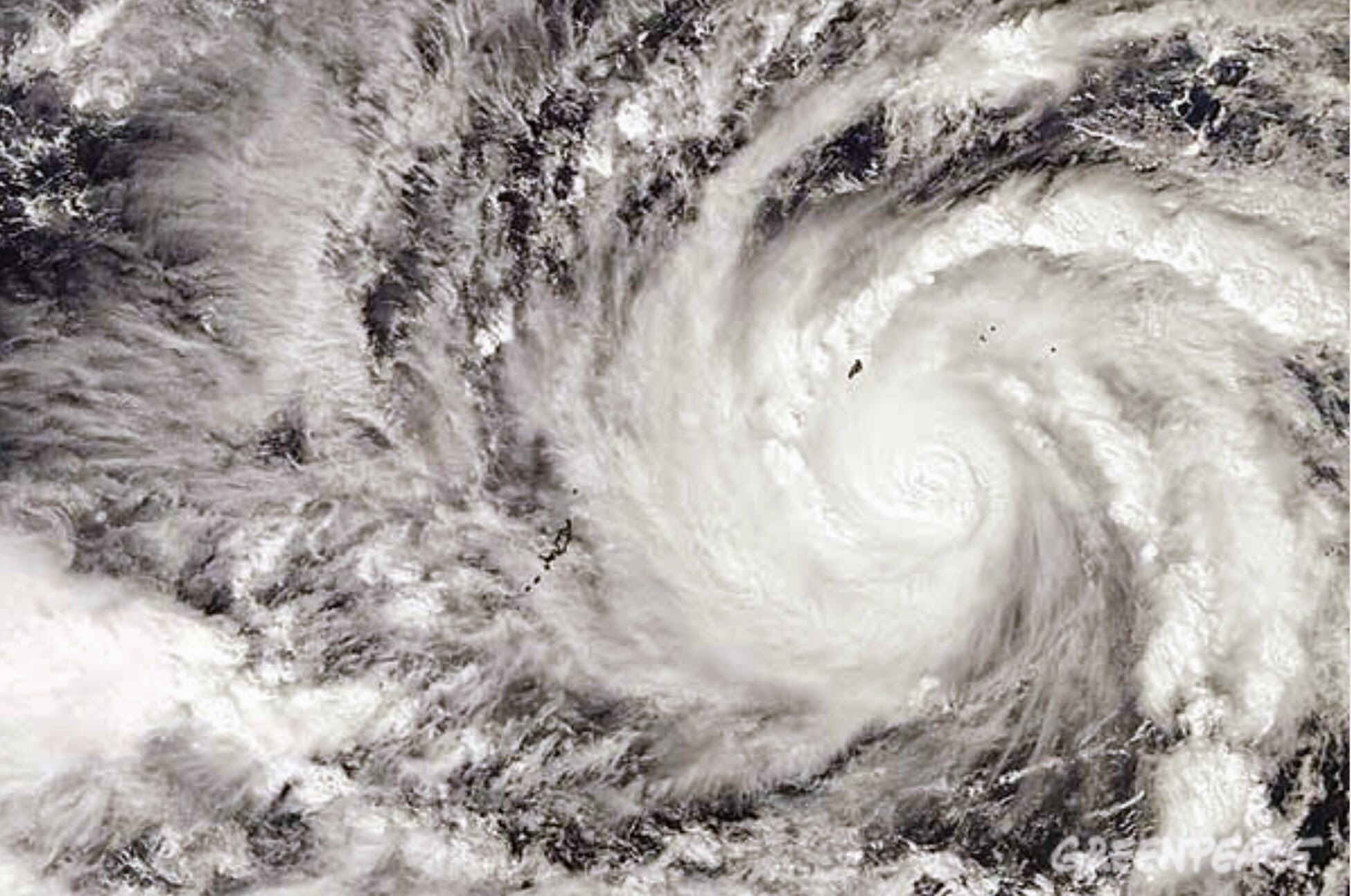
Typhoon Hagupit

“One of the biggest evacuations in peacetime” strikes a sickening chord. Is this peacetime or are we at war with nature?

I was about to head to Lima, when I got a call to come to the Philippines to support our office and its work around Typhoon Hagupit (which means lash). In Lima another round of the UN climate talks are underway to negotiate a global treaty to prevent catastrophic climate change. A truce of sorts with nature.

But these negotiations have been going on far too long, with insufficient urgency and too much behind the scenes, and not so much behind the scenes, interference from the fossil fuel lobby.

This year, like last year and the year before these negotiations take place against a devastating backdrop of a so-called ‘extreme weather event’, something that climate scientists have been warning us about if we don’t take urgent action.

Tragically, we are not taking urgent action. Nature does not negotiate, it responds to our intransigence. For the people of the Philippines, and in many other parts of the world, climate change is already a catastrophe.

Only one year ago, Super Typhoon Haiyan killed thousands, destroyed communities and caused billions of dollars in damage. Many survivors who are still displaced have this week had to evacuate the tents they have been living in as Typhoon Hagupit carves a path across the country as I write.

It’s too early to assess the impact so far—we are all hoping early indications will spare the Philippines of the same pain that was experienced after Haiyan.

Here in Manila, we prepare to travel to the impacted areas in the wake of Typhoon Hagupit, or Ruby, as it has been named. We will offer what minor assistance we can.

We will stand in solidarity with the Filipino people and we will call out those who are responsible for climate change, those who are responsible for the devastation and who should be helping pay for the clean up and for adaptation to a world in which our weather is an increasing source of mass destruction.

With heavy hearts we prepare to bear witness. We challenge those in Lima to turn their attention from the lethargy and process of the negotiations and pay attention to what is happening in the real world.

We call on them to understand that climate change is not a future threat to be negotiated but a clear and present danger that requires urgent action now!

Each year, the people of the Philippines learn the hard way what inaction on emissions mean. They might be slightly better prepared and more resilient, but they are also rightly more aghast that each year—at the same time—the climate meetings seem to continue in a vacuum, not prepared to take meaningful action, not able to respond to the urgency of our time and not holding accountable the Big Polluters that are causing the climate to change with ferocious pace.

Before leaving for Manila I also received a message from Yeb Saño, climate commissioner for the Philippines: “I hope you can join us as we bear witness to the impact of this new super typhoon. Your help would be very valuable in delivering a message to Lima loud and clear.”

Yeb was the Filipino chief negotiator for three years at the UN climate talks and recently visited the Arctic on a Greenpeace ship to witness the Arctic sea ice minimum. Two years ago in Doha, as Typhoon Pablo took the lives of many he broke through the normally reserved language of dispassionate diplomacy that dominates UN climate treaty talks:

“Please … let 2012 be remembered as the year the world found the courage to … take responsibility for the future we want. I ask of all of us here, if not us, then who? If not now, then when? If not here, then where?”

I am joining Greenpeace Philippines and Yeb to visit the worst hit areas, document the devastation and send a clear message from climate change ground zero to Lima and the rest of the world that the ones that are responsible for the majority of emissions will be held accountable by the communities that are suffering the impacts of extreme weather events linked to climate change.

We will call on the heads of the fossil fuel companies who are culpable for the unfolding tragedy to examine their consciences and accept their historic responsibility. They say the truth is the first casualty of war, in this war against nature, the truth of climate science is unquestionable.

Please join us. Please add your voice by signing our petition calling on Big Polluters to be held legally and morally accountable for climate damages. After signing the petition you will be redirected to a site where you can make a donation to the relief efforts of partner organizations. More


Monday, August 19, 2013

Weather-related losses take their toll

August 19th 2013 8:00 AM Extreme weather events are taking their toll on the insurance industry even though midway through August the North Atlantic has yet to see its first hurricane of the year.

So far there have been five tropical storms including the currently active system Tropical Storm Erin, which is expected to dissipate in the mid-Atlantic.

But while there have been no hurricanes to wreak economic losses, there have been plenty of weather-related events elsewhere to keep risk managers and (re)insurance executives on their toes.

Zurich Insurance Group reported on Thursday a sharp decline in its second-quarter profits, mainly due to weather-related losses in Europe. The company’s net income fell 27 percent to $789 million.

Other insurers and reinsurers are counting the cost of this year’s severe weather-related events.

The major economies of the US, China and Canada have all suffered billions of dollars of losses as a result of severe weather, flooding and — in the case of China — earthquakes.

Strong thunderstorms and rain across the greater Toronto metropolitan region last month caused significant flooding and power outages, which affected businesses, vehicles and infrastructure. Economic losses from that single event have been estimated by AON Benfield at $1.45 billion, with around half of that cost covered by insurance. There was further severe weather in Ontario and Quebec provinces during July, with winds gusting up to 100mph during intense thunderstorms, which caused millions of dollars in insured losses.

Even before July, Canada had already suffered severe weather and flooding. Floods that occurred between June 19 and 24 claimed four lives and caused economic losses of $5.3 billion.

The insurance arm of Canada’s TD Bank Group expected claims costs from the severe weather in Alberta and Toronto to have a pre-tax impact of approximately $170 million after reinsurance.

Group president Ed Clark, in a statement to investors last month, said: “While banks and insurance companies can incur losses from severe weather events, our greatest concern is with the communities and individuals who experienced the devastation in Alberta and the GTA (Greater Toronto Area). We also thank our employees for their efforts to support our customers through these events, when many employees themselves were dealing with the impact.”

In the US weather-related losses have also been significant since the start of the year, with the Plains, Midwest and Northeast suffering economic losses of $6.5 billion in two bouts of severe weather in May and June.

For China it has been worse. During July torrential rainfall across many parts of the country brought floods that claimed the lives of almost 200 people and caused economic losses of more than $7 billion. A magnitude 5.9 earthquake on July 22 in the Gansu Province killed at least 95, damaged 80,000 homes and caused economic losses of $3.25 billion. Since the start of the year China has suffered economic losses due to a number of smaller earthquakes and weather-related events, by far the most significant is the $6 billion loss attributed to drought conditions in parts of the country since January 1.

Europe, Asia, Africa and South America have all suffered weather-related economic losses. A drought in Brazil between January and June caused losses estimated at $8.5 billion, while flooding in central Europe in May and June caused economic losses of $22 billion.

In the aftermath of the devastating floods in Europe, Peter Höppe, head of Munich Re’s Geo Risks Research unit, said: “It is evident that days with weather conditions that lead to such flooding are becoming more frequent and that such weather systems tend to remain stationary for longer. With this higher persistence of weather patterns, the potential for heavy and long-lasting precipitation within a trough situation, for example, increases. The counterpart to this are stationary high-pressure systems which in summer increase the risk of heatwaves and periods of drought.

“Debate in climate research is currently focusing on what the causes of such changes in weather patterns could be and what role climate change might play in this. But it is naturally not possible to explain single events on this basis.”

Even places as remote as the Azores archipelago have not escaped the wrath of the weather. In March the North Atlantic island group took a $45 million economic hit, with more than 500 properties damaged and three lives lost after days of heavy rain lashed the island of Terceira causing severe flooding.

Significant economic losses during July:

US (Severe weather) $175m+

Canada (Severe weather) $1.45b+

China (Flooding) $7b+

Significant economic loss events (January to June 2013):

US (Severe weather May 18-22) $4.5b+

Canada (Flooding June 19-24) $5.3b+

Brazil (Drought Jan 1-May 31) $8.3b+

Europe (Flooding May 30-June 15) $22b+

China (Drought Jan 1-July 31) $6b+

* Economic loss figures from AON Benfield’s Global Catastrophe Recap.